The Jot™ platform will be inaccessible from XX to XX PT on [Day], [Month] [Day], [Year].
The Jot™ platform is currently experiencing an outage. We are working to restore service as quickly as possible.


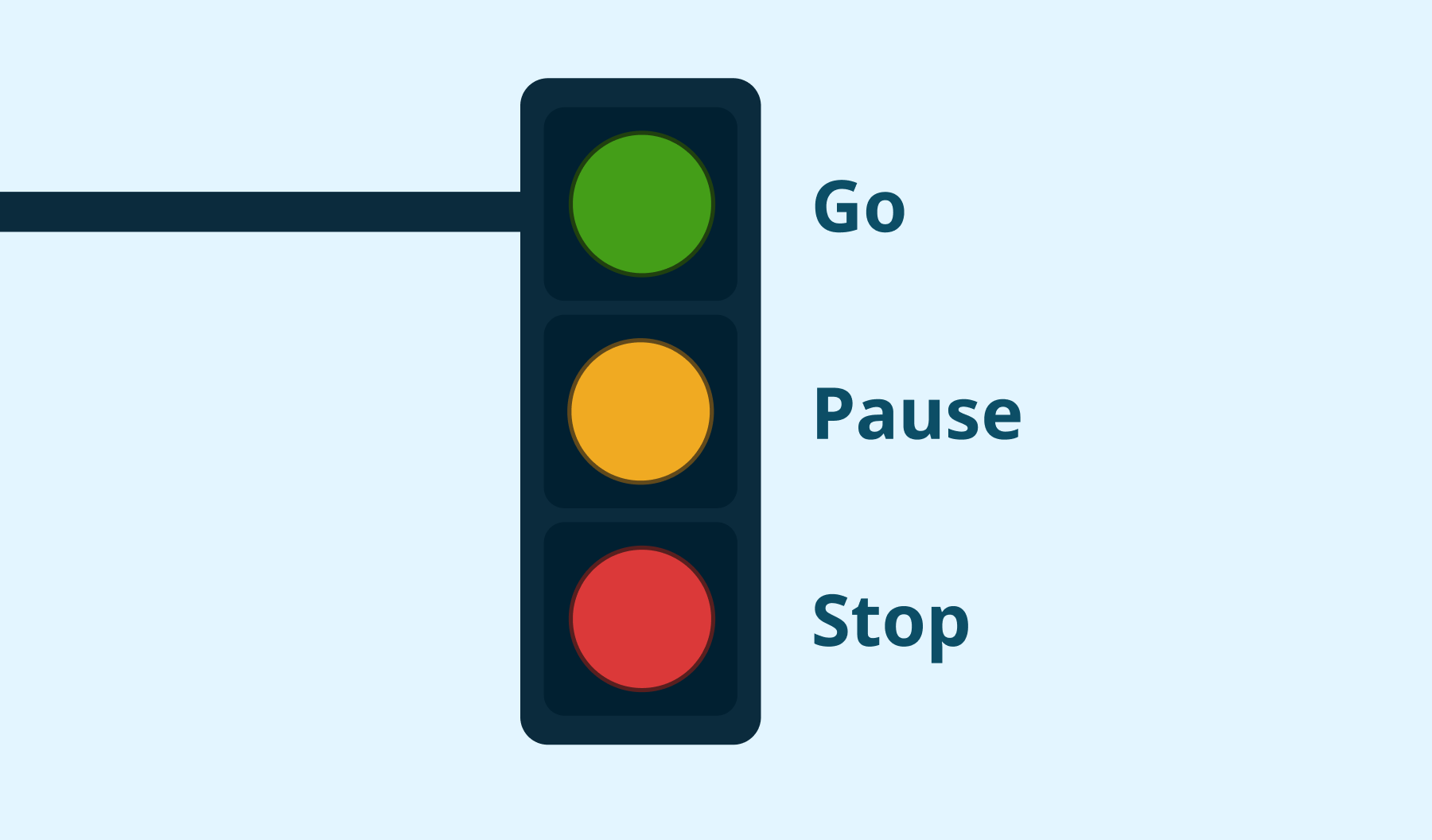
Not every tool belongs at the signing table. Use this simple traffic-light framework to know when technology strengthens your notary business and when it quietly erodes client trust.
Two notaries plan a busy day of signings. One uses a scheduling and navigation app to build in enough drive time between appointments. The other uploads the signer's documents into an Artificial Intelligence (AI) assistant to estimate how long each will run. Same goal, but only one protected the client's confidential information.
That's the real challenge with technology today. The good news? You don't need to be a tech expert to make smart choices. You just need to know which light you're at. Every tool falls into one of three: green (go), yellow (pause), or red (stop). Learn to read the lights, and you'll make smart calls on tools that don't even exist yet.
Green-light tools work behind the scenes. They save you time without ever touching the signer's experience or confidential information:
These boost your efficiency without changing the personal nature of a signing. If it saves you time before the appointment and stays out of the room, it's green.
Yellow-light tools could help, but it depends on context. This is anything new or client-facing you haven't fully vetted: a tool you're thinking of bringing to your next signing, an unfamiliar AI use, or any tool that changes how the signing feels.
Before you proceed, ask one question: does this support the signer's experience, or compete with it? If it could create confusion or pull attention away from the signing, slow down. Pausing isn't falling behind. It's exactly the kind of judgment your clients trust you for. Yellow doesn't mean no. It means check before you go.
Red-light tools put confidentiality or client comfort at risk. Two are worth calling out by name:
Confidential information in AI. For most home buyers, a closing is one of the biggest financial moments of their lives, and they're trusting you with sensitive details. Names, addresses, loan amounts, account or Social Security numbers, and document contents stay out of AI tools. That includes uploading those documents just to estimate how long a signing will run. On a back-to-back day, we get why that's tempting, but it's a line worth holding. The rule: if it came from a signing assignment, it doesn't go into an AI tool.
Recording devices and smart glasses. Read the room. You know your signers better than any tool does. Anything capturing audio or video can make people uneasy, even with the best intentions. The moment a device raises a silent "wait, is this being recorded?" it's working against the trust you're there to build. When in doubt, keep it in your pocket.
And one more red: letting any tool override the professional judgment you're trained to provide. When you're at a red light, trust yourself over the tool.
Not every tool fits neatly into a color. When one doesn't, run it through this quick gut-check:
Five yeses is a green light. Any hesitation? Treat it as yellow until you're sure.
Think back to those two notaries. The difference between them wasn't tech skill. It was knowing which light they were at. New tools will keep reshaping how notaries work, but the framework holds: protect confidentiality, keep the signer's experience central, and let your judgment lead.
Jot™ is built to help you navigate that evolution with confidence, through practical resources, educational content, and a platform designed for your success. Trust your read on the lights, and lean on Jot whenever you want a second opinion. Explore more in the Jot Notary Guide for best practices, industry insights, and tips to grow your business.


Jot and the Jot logo are trademarks of Endpoint Technologies, LLC and/or its affiliates.


